

 English
 中文简体


Submit feedback
Why Flat Wipers Outperform Traditional Blades: A Technical Comparison and Retrofit Guide

Your windshield wipers are the only component standing between you and a sudden loss of visibility at highway speed. Yet most drivers tolerate streaking, chattering, and that frustrating unwiped arc in the middle of the glass for months before acting. The traditional wiper blade, with its exposed metal frame and articulated joints, has served for decades, but its structural limits become obvious the moment conditions turn demanding. A flat wiper is not merely a styling choice. It replaces the entire pressure-delivery mechanism, and the difference is measurable in contact uniformity, aerodynamic stability, and winter reliability. This guide breaks down the engineering behind the shift and explains how to determine whether your vehicle can accept a retrofit upgrade without modification.
What Is a Flat Wiper and How Does Its Architecture Differ?
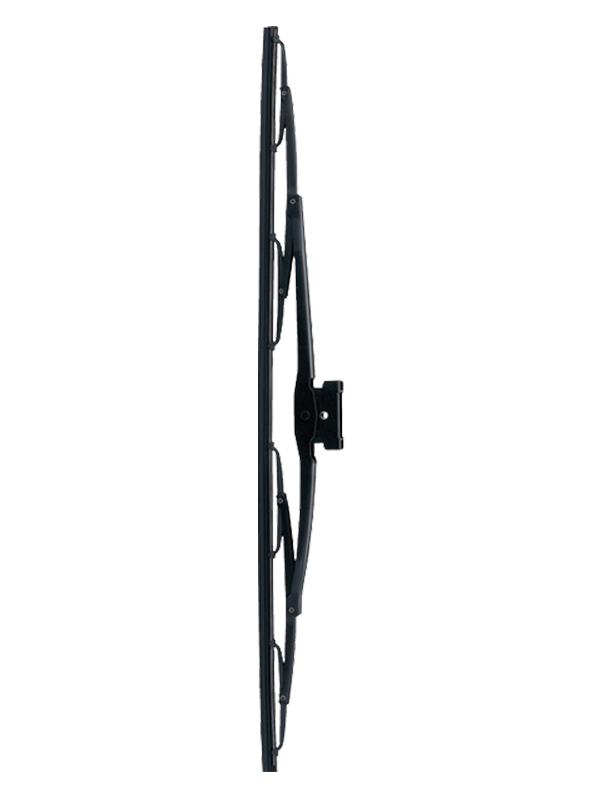
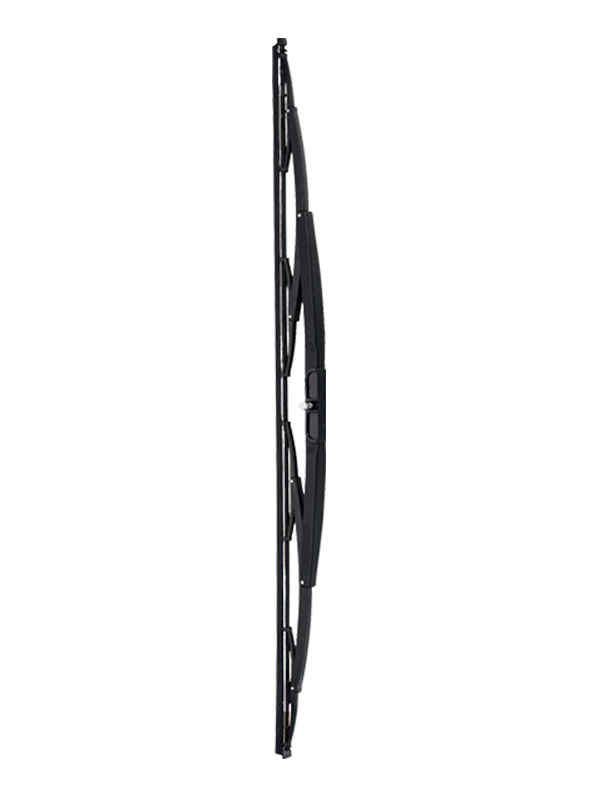
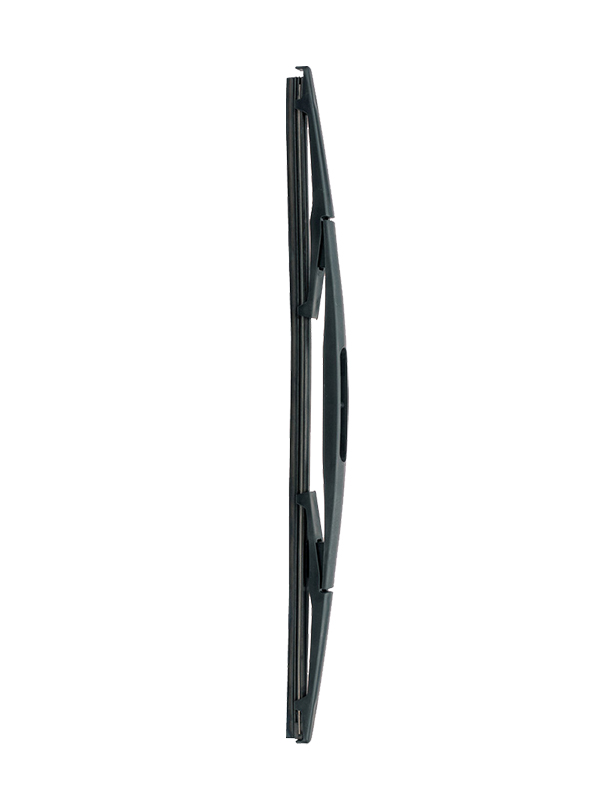
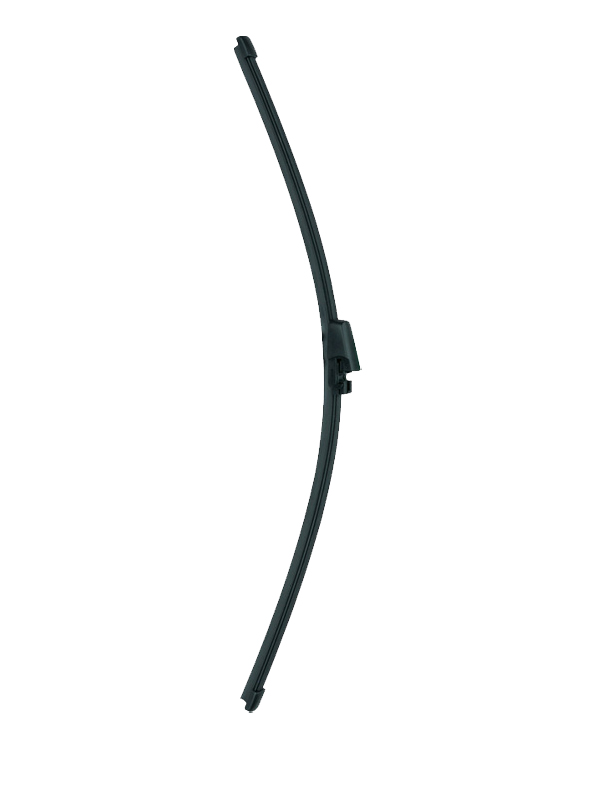
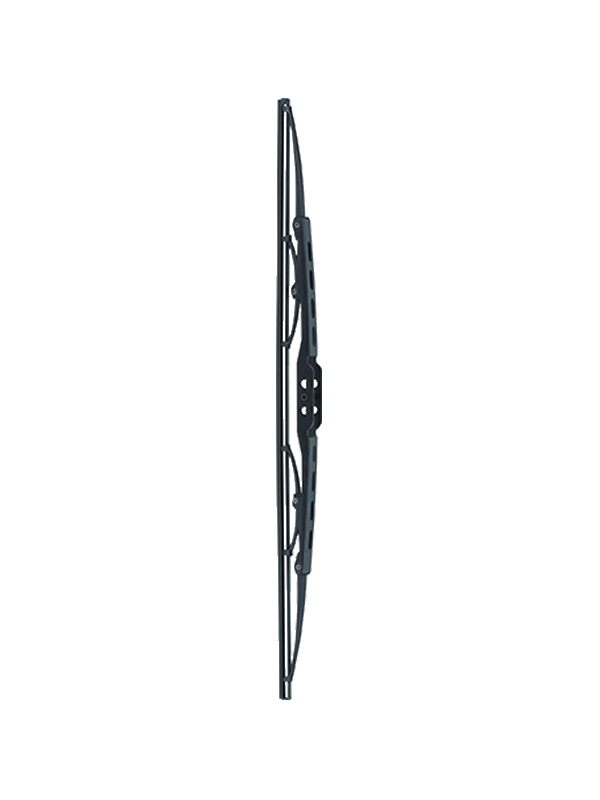
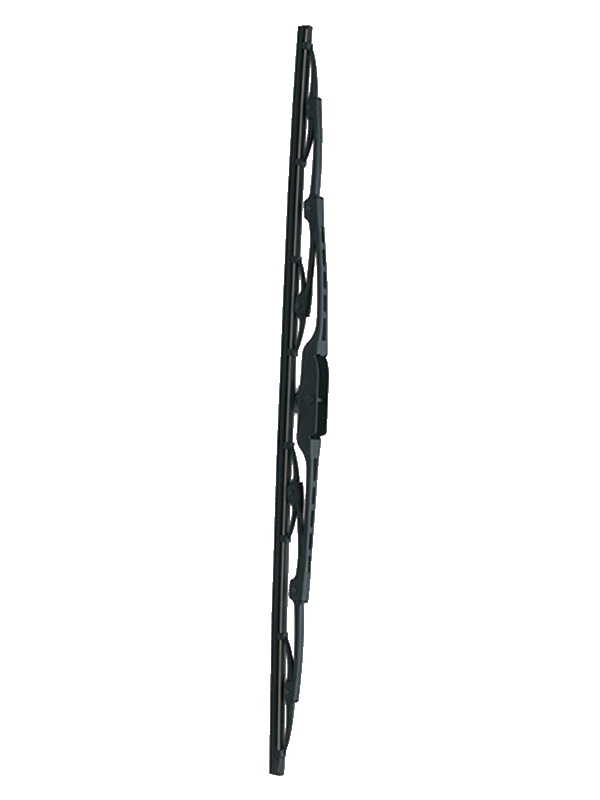
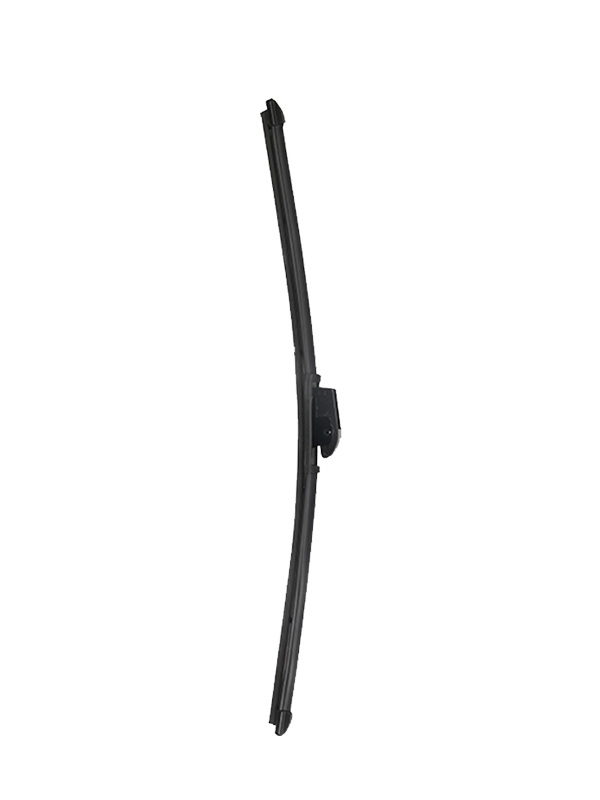
A flat wiper, often called a beam blade, eliminates the external metal superstructure entirely. Instead of a frame with six to eight pivot points that press down on the rubber through claws, a flat wiper uses one or two curved steel spring strips embedded within the rubber spine. When the blade is pressed against the glass, those pre-tensioned strips distribute force along the entire length of the wiping edge.
The practical consequence is contact geometry. A traditional blade concentrates pressure at the claw locations, creating localized high-force zones and gaps between them. A flat wiper converts that point-loading into a continuous contact band. Aerodynamic research on beam blade designs shows that this integrated spring construction produces a more uniform pressure profile across the windshield curvature, particularly at the blade extremities where framed designs typically lose grip.
Advantage 1: Superior Pressure Distribution for Streak-Free Wiping
The claw-based pressure system of a framed blade has a known failure mode: as the articulation points wear, the force applied through each claw becomes uneven. One section may press too hard, causing the rubber to fold or chatter; another may lift slightly, leaving a thin film of water that dries into a visible streak. This is why older traditional blades often produce an intermittent arc pattern rather than a clean sweep.
A flat wiper's spring strip maintains tension along its full length regardless of minor wear. The result is a wiping edge that stays parallel to the glass across its entire span. Aftermarket engineering data indicates that flat blade designs can increase the clamping force against the windshield by approximately thirty percent compared to conventional constructions, directly translating to fewer missed areas during each stroke. For the driver, this means no more leaning forward to peer through the unwiped band at the top or bottom of the sweep.
Advantage 2: Aerodynamic Stability and Wind Lift Resistance
At speeds above roughly eighty kilometers per hour, airflow over the windshield creates a low-pressure zone that tries to lift the wiper off the glass. A traditional blade's metal frame acts as a miniature air dam, catching the wind and amplifying that lift. Drivers often notice the blade skipping or floating during highway driving in heavy rain, precisely when maximum contact is most critical.
Flat wipers address this through profile and integrated spoiler geometry. The low, continuous shape presents minimal frontal area to the airflow, while the molded spoiler on the blade's upper surface converts dynamic pressure into downward force. Studies of beam blade aerodynamics confirm that this passive downforce increases with vehicle speed, pressing the rubber more firmly against the glass exactly when wind lift would otherwise compromise a framed blade. The secondary benefit is acoustic: the absence of a multi-jointed frame eliminates the resonant whistling and rattle that framed wipers produce at speed.
Advantage 3: Winter Durability Without Hinge Freeze
The articulated joints of a traditional wiper are its winter Achilles heel. Snow and freezing rain accumulate in the gaps between the frame and the claws. When temperatures drop, that moisture freezes the joints solid, preventing the blade from conforming to the windshield curvature. The result is a wiper that skips across the glass, clears only a narrow strip, or in severe cases, tears its rubber from the frozen frame.
A flat wiper has no exposed hinge points for ice to invade. The rubber and spring strip form a sealed unit that maintains flexibility at low temperatures. For drivers in cold climates, this translates to a blade that works immediately after an overnight freeze without the need to manually break ice from the wiper assembly. The absence of a frame also means snow cannot pack into the superstructure and add weight that strains the wiper motor.
- No exposed pivots — nothing for ice to lock
- Sealed spring enclosure — maintains flexibility below freezing
- Low-profile shape — snow sheds rather than accumulates
Advantage 4: Quieter Operation and Judder Reduction
Judder, the skipping and vibrating motion that produces a rhythmic squeal, originates from two sources in a framed blade: uneven pressure and resonance through the metal linkages. When the rubber encounters a patch of variable friction on the glass, the frame transmits that vibration up through the arm and into the cabin. The multiple joints amplify rather than dampen the oscillation.
A flat wiper's single-piece construction eliminates the linkage path. The spring strip holds the rubber in consistent tension, preventing the micro-lifting that causes chatter. Silicone rubber compounds, increasingly common in flat blade designs, further reduce friction against the glass and can leave a thin hydrophobic film that encourages water to bead and shed rather than smear. The practical outcome is a sweep that remains silent from the first stroke to the last, without the periodic squeak that prompts drivers to replace otherwise functional framed blades.
Advantage 5: Retrofit Compatibility and Upgraded Appearance
The most common hesitation around flat wipers is compatibility: can a vehicle that came with traditional blades switch? For the vast majority of vehicles, the answer is yes, without any modification to the wiper arm. Retrofit flat wiper blades ship with multi-adapter hardware that clicks onto standard arm interfaces, including J-hook, pin, bayonet, and pinch-tab configurations. The adapter bridges the original arm and the flat blade's connector, preserving the arm's original function while delivering the beam blade's performance.
The visual result is equally noticeable. A flat wiper sits flush against the windshield with no skeletal metal above it, giving the cowl area a cleaner, more integrated appearance consistent with modern vehicle design. More importantly, the retrofit path means there is no need to replace the vehicle to access current wiper technology. The upgrade is reversible and requires only minutes per side.
Retrofit Decision Flow
Flat Wiper vs Traditional Wiper: Direct Comparison
The table below summarizes the structural and performance differences that matter in daily driving. Each row reflects a design characteristic rather than a brand claim.
| Feature | Traditional Wiper | Flat Wiper |
|---|---|---|
| Pressure contact points | 6 to 8 (claw-based) | Continuous along full length |
| Wind lift resistance | Low to moderate | High (integrated spoiler) |
| Ice and snow accumulation | Common at joints | Rare (no exposed hinges) |
| High-speed noise | Audible frame rattle | Minimal |
| Retrofit availability | Baseline configuration | Yes, with multi-adapter |
| Visual profile | Exposed metal frame | Low, integrated |
Frequently Asked Questions
Q1: Are flat wiper blades worth the additional cost over traditional blades?
For drivers who regularly travel at highway speeds, face winter conditions, or have grown frustrated with streaking and chatter, yes. The flat wiper's continuous pressure distribution and aerodynamic stability address the specific failure modes that make framed blades underperform. If your driving is exclusively low-speed and mild-weather, the performance gap is less pronounced, but the winter reliability advantage remains relevant in most climates.
Q2: Can I replace traditional wiper blades with flat wipers on my current vehicle?
In most cases, yes. Retrofit flat wiper blades include adapters that fit common arm types including J-hook, pin, bayonet, and pinch-tab. The key is matching the adapter to the arm and selecting the correct blade length. No permanent modification to the wiper arm is required, and the process is reversible if needed.
Q3: How often should flat wipers be replaced?
Every six to twelve months, depending on climate and usage. Hot climates degrade rubber faster; cold climates stress the material through freeze-thaw cycles. Silicone flat blades may last toward the upper end of that range. Regardless of type, replace when streaking, chatter, or incomplete contact appears rather than waiting for a fixed interval.
Q4: Do flat wipers actually perform better in snow and ice?
Yes, primarily because they have no exposed hinges. Ice cannot freeze the articulation points solid, so the blade retains its ability to conform to the glass. The low-profile shape also sheds snow rather than trapping it. This does not make a flat wiper immune to extreme conditions, since heavy ice accumulation on the windshield itself still requires scraping, but the blade mechanism itself remains functional when framed designs may not.
Conclusion: The Structural Case for Upgrading
A flat wiper is not a cosmetic accessory or a marginal refinement. It replaces a century-old pressure-delivery architecture, claws on a frame, with a continuous spring system that keeps the rubber in uniform contact with the glass. The consequences are visible in every sweep: fewer streaks, quieter operation, stable performance at speed, and winter reliability that framed designs cannot match. For drivers still running traditional blades, the practical question is not whether the upgrade is worth considering, but whether there is any reason to delay it. If you are ready to make the change, identify your arm type and blade length, then explore compatible flat wiper options to match your vehicle.

China's famous universal wiper blade manufacturer and customized wiper blade supplier.
share
contact information
Tel: +86-574-86572688
Fax: +86-574-86572685
Email: sales@aiduo-wiper.com
Add: Mechanical and Electrical Industrial Park, Luotuo Town, Zhenhai District, Ningbo City, Zhejiang Province, China.

