

 English
 中文简体


Submit feedback
Metal Frame vs Frameless: How to Choose the Right Special Car Wiper

A distributor in a fast-growing aftermarket region once faced a return rate of nearly 9 percent on a single wiper listing. The blade design looked fine on paper, but the real problem was a mismatch between the arm connector, the frame stiffness and the rubber compound, which failed under repeated sun and cold cycling. The lesson is that a special car wiper performs only as well as its fitment, structure and testing behind it. This guide walks through how wholesale buyers can evaluate that package before placing a bulk order.
For wholesale buyers, most wiping complaints trace back to three factors: vehicle fitment, frame design and rubber quality.
What a Special Car Wiper Is and How It Differs From Universal Blades
A special car wiper is a blade engineered for a specific vehicle model, windshield curvature and wiper arm type. Universal blades use adapters to fit many arms, which adds joints, play and noise. A vehicle-specific design removes most of those compromises by matching the blade length, the connector and the curvature profile to the original equipment layout.
Fitment Logic Buyers Should Understand
Fitment is governed by the connector system rather than by blade length alone. Two blades of identical length can behave very differently if the connector sits at a different angle or height on the arm.
| Connector Type | Typical Application | Main Fitting Risk |
|---|---|---|
| Side lock | Many mid-range and older models | Incorrect lock width causes lifting |
| J-hook | Common on European and Asian vehicles | Hook depth must match the arm exactly |
| Pin type | Specific arm designs from certain makers | Pin spacing errors reduce contact pressure |
| Bayonet | Older vehicle platforms | Adapter quality affects stability |
For a distributor, the practical step is to build a fitment list from vehicle model, year and arm type, then verify each connector against physical samples before listing.
Metal Frame Versus Frameless Designs
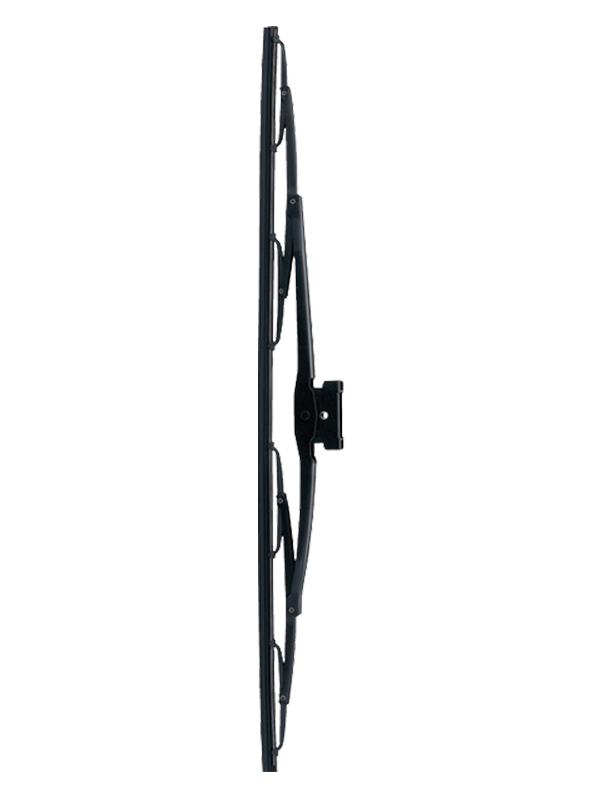
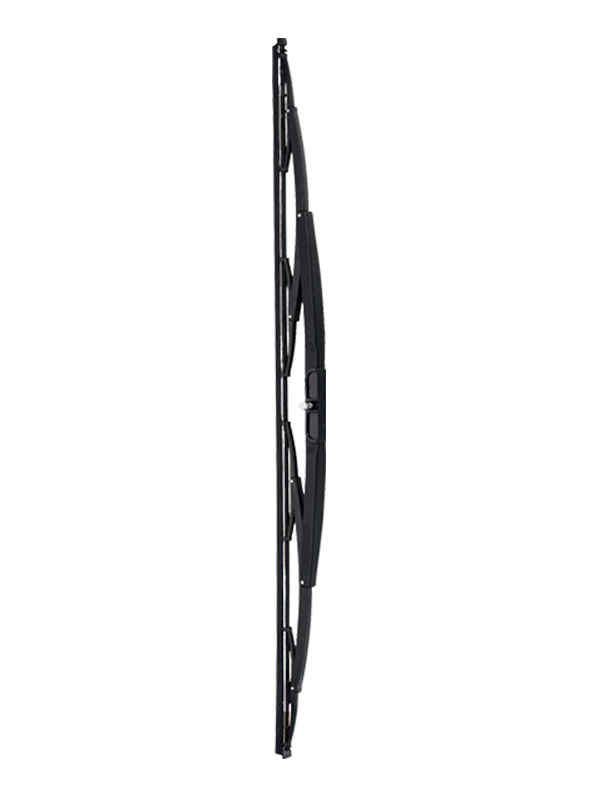
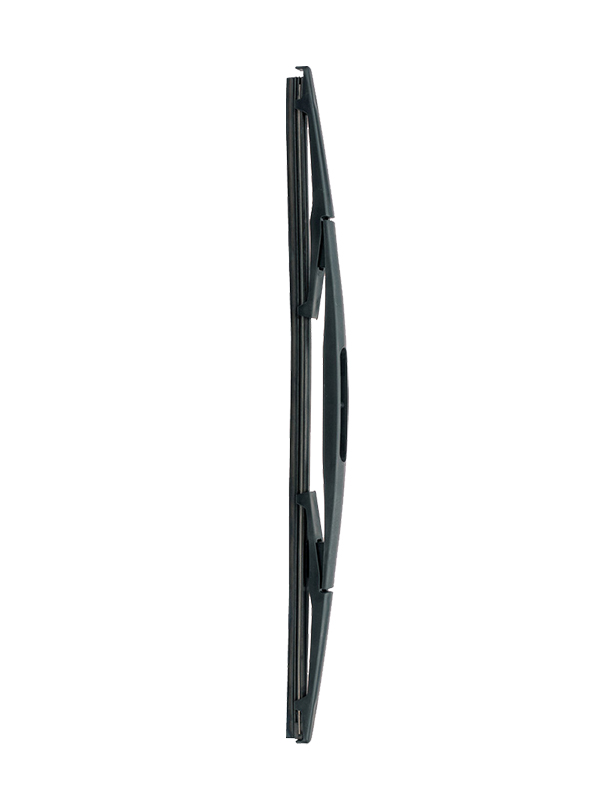
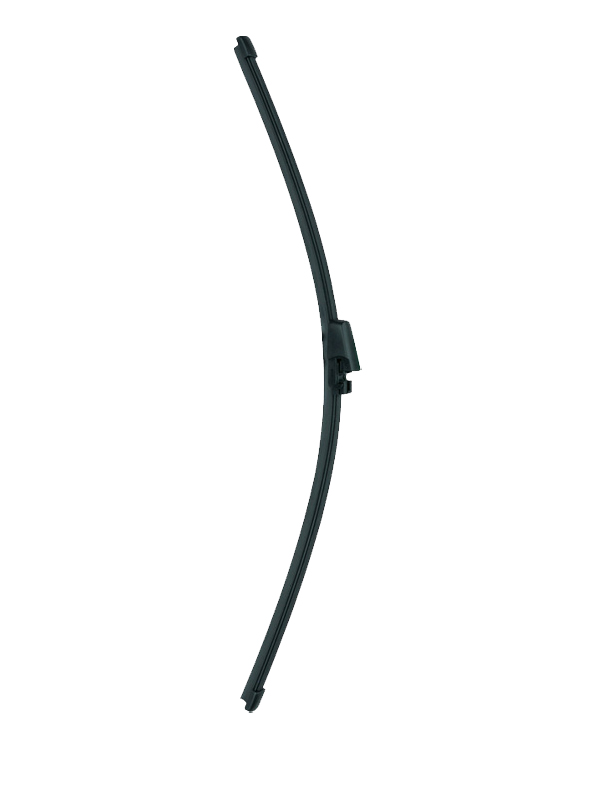
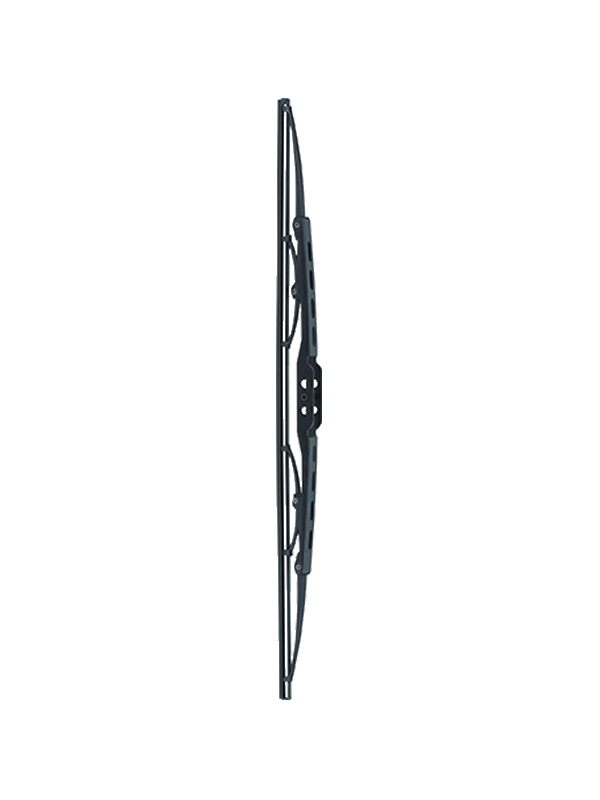
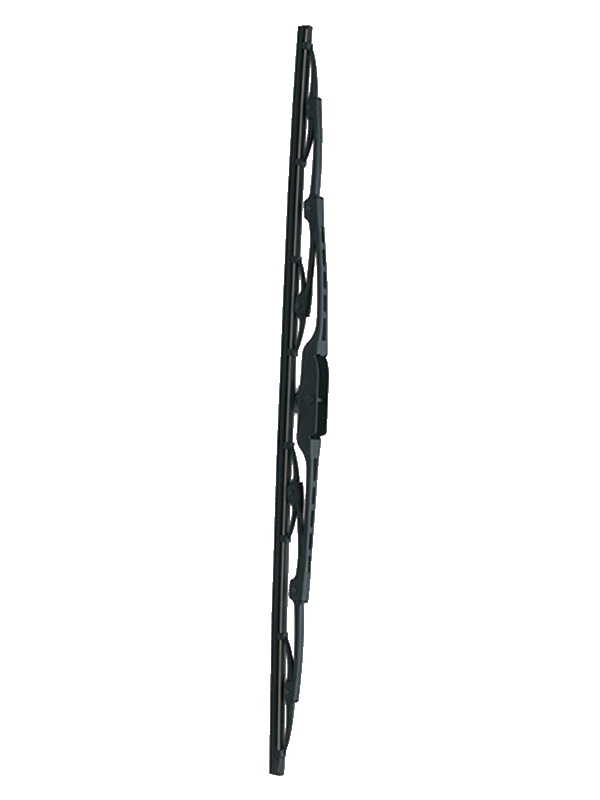
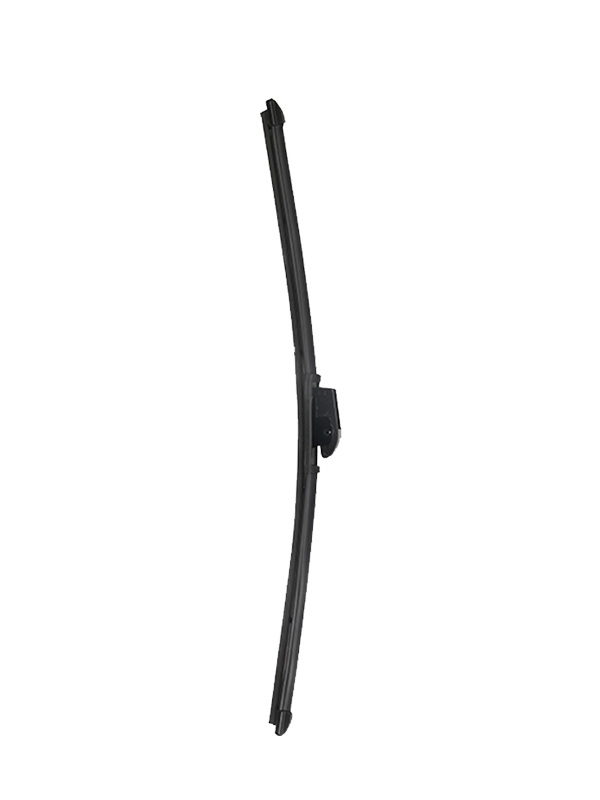
The frame is the skeleton that transfers arm pressure into the rubber element. A metal frame special car wiper uses a steel or metal-reinforced structure to hold a consistent shape across the blade length. A frameless design relies on the rubber and a thin spring element, which can be lighter but more sensitive to wind and uneven pressure.
Pressure Distribution Across the Blade
Even pressure is the main reason a stiff frame improves wiping. When pressure concentrates at a few points, the blade lifts in some areas and presses too hard in others, leaving streaks and chatter.
Wind Lift at Highway Speed
Wind pressure rises sharply with speed, and a flexible blade can lift away from the glass at the ends. A well-built frame resists this deformation, which is why buyers serving highway-heavy markets often specify a metal frame as a baseline requirement.
A frame is not a substitute for good rubber. The best results come from a stiff frame paired with a rubber compound that stays flexible across temperature ranges.
Rubber Compounds and Surface Treatments
The wiping element decides how cleanly a blade removes water, snow and road film. Compound choice affects flexibility in cold weather, resistance to ozone and sunlight, and the rate at which the edge wears.
Natural Versus Synthetic Rubber
| Property | Natural Rubber | Synthetic Blend |
|---|---|---|
| Flexibility in cold conditions | Generally strong | Varies by formulation |
| Ozone and UV resistance | Needs good additives | Often stronger when specified |
| Unit cost | Moderate to higher | Usually lower |
| Wiping consistency over time | Stable with quality control | Stable with quality control |
Neither material is automatically superior. Buyers should request the compound specification, not just the material name, and confirm the hardness range for each batch.
Surface Treatments That Affect Performance
- Lubricant-based coatings reduce friction and help the blade glide during dry starts.
- Graphite-based coatings improve smoothness on rough or dry glass.
- Chemical surface modification improves resistance to road salts and cleaning agents.
Each treatment has a trade-off between initial smoothness and long-term durability, so treatment selection should match the target climate and customer use.
Testing Protocols That Matter for Buyers
Test reports are the most efficient way to reduce return risk. Yet many buyers accept generic claims without checking what was measured, how many cycles were run and under which conditions.
Initial Wiping Performance
The initial wiping test checks how cleanly a new blade removes water and whether it leaves streaks at normal arm pressure. Buyers should ask for test results at several speeds and on both wet and dry glass.
Durability and Environmental Aging
Cycle testing shows whether the blade keeps its wiping quality after heavy use. Salt spray and ozone tests reveal corrosion on the metal parts and cracking on the rubber edge, two failures that often appear only after months in the field.
- Request the test standard name, the number of cycles and the pass criteria.
- Confirm that the same sample was used for all tests in the report.
- Check whether the report covers the actual compound and coating in your order.
Selection Checklist for Wholesale Buyers
A structured checklist keeps sourcing decisions consistent across product lines. The flow below summarizes the steps that experienced importers use before approving a pilot order.
lead time- Confirm the vehicle model, year and wiper arm type.
- Check the connector against physical samples, not only drawings.
- Verify rubber compound, coating and frame specifications.
- Review independent or internal test reports with cycle counts.
- Approve a pilot batch before committing to full volume.
Common Quality Problems and How to Prevent Them
Most field complaints fall into a few categories. Knowing the likely cause helps buyers write specifications that prevent the problem instead of reacting to returns.
| Symptom | Likely Cause | Prevention Step |
|---|---|---|
| Chatter or skipping | Soft frame or uneven arm pressure | Specify frame stiffness and pressure test |
| Streaking | Rubber hardness mismatch | Require hardness range per batch |
| Edge cracking | Weak ozone resistance | Run ozone aging test |
| Lifting at speed | Wrong length or weak frame | Verify fitment and wind lift performance |
| Corrosion on metal parts | Inadequate coating | Require salt spray results |
Many returns are not product failures. They come from mismatched specifications between what the buyer expected and what was manufactured.
Working With OEM and ODM Suppliers
Private label programs and custom designs are common among distributors who serve specific regions. A capable OEM special car wiper program should cover technical customization as well as packaging and documentation.
- Custom rubber compound, edge profile and surface coating
- Connector adaptation for regional vehicle fleets
- Packaging, labeling and multilingual instruction sheets
- Technical documents such as test reports and material declarations
Sample and Minimum Order Planning
Samples should be tested against the same specification as the production batch. Ask whether the sample is made on the production line or in a prototype workshop, because the results can differ. Minimum order quantities usually depend on customization depth, so a standard design with a custom label is often easier to start with than a fully new profile.
A pilot order with clear acceptance criteria is the fastest way to validate a supplier before scaling volume.
Packaging and Logistics Considerations
Wiper blades are light but bulky, and packaging damage is a common hidden cost. Rubber edges can deform under compression, and metal frames can bend in transit if the pallet is not stabilized.
- Use individual blister or sleeve packaging to protect the rubber edge.
- Stack cartons with corner protection and avoid overhang.
- Label each SKU with vehicle fitment and part number for quick receiving checks.
Clear labeling reduces warehouse errors and makes it easier for downstream retailers to match the correct blade to each vehicle.
Frequently Asked Questions
Q1: What is a special car wiper?
A special car wiper is a blade designed for a specific vehicle model and arm type. It matches the original length, connector and curvature, which reduces lifting and noise compared with adapter-based universal blades.
Q2: Is a metal frame or frameless design better?
A metal frame usually provides more even pressure and better resistance to wind lift at high speed. Frameless designs can be lighter and suitable for milder climates, but they are more sensitive to uneven arm pressure.
Q3: How can I confirm fitment before ordering?
Request physical samples, check the connector against the arm, and compare the blade length and curvature with the vehicle reference list. A small pilot batch helps confirm fitment in real use.
Q4: What test results should I request?
Ask for initial wiping performance, durability cycle results, salt spray corrosion results and ozone aging results. Each report should state the test standard, the sample count and the pass criteria.
Q5: Can suppliers provide OEM or ODM customization?
Many manufacturers offer OEM or ODM programs that include rubber compound changes, coating options, packaging design and labeling. The scope and minimum order quantity depend on how much the design differs from the standard product.
Q6: How long does a typical sample process take?
Sample timelines vary with the level of customization. Standard fitments can often be sampled quickly, while new connector or frame designs require tooling and additional testing time.
Key Takeaways for Sourcing Teams
A reliable special car wiper program depends on fitment accuracy, frame stiffness, rubber specification and transparent testing. Buyers who verify these four elements before ordering see fewer returns and smoother long-term supply.
- Verify the connector and arm type before approving any listing.
- Specify rubber compound, hardness and coating in writing.
- Request complete test reports with cycle counts and pass criteria.
- Validate the supplier with a pilot batch and clear acceptance rules.

China's famous universal wiper blade manufacturer and customized wiper blade supplier.
share
contact information
Tel: +86-574-86572688
Fax: +86-574-86572685
Email: sales@aiduo-wiper.com
Add: Mechanical and Electrical Industrial Park, Luotuo Town, Zhenhai District, Ningbo City, Zhejiang Province, China.

